The Physical Signs of Depression: Stress, Strain, and Body Pain
Madison LawrenceDepression often speaks through the body long before it is felt in the mind. For millions of Americans, these signals are frequently misread or mistaken for a bad back, chronic exhaustion, or simply the wear of everyday life.⁷
The first signs of depression are not always sadness but a profound shift in how the body functions: disrupted sleep, unexplained aches, or a heaviness that rest can’t remedy.⁶ These are real biological indicators of low mood that are too often missed or overlooked. That’s why the Magnus Medical team put together this infographic, mapping out how the physical signs of depression can affect the body.
Recognizing these signs as part of a whole-body condition is the first step toward getting the right help.
Note: While these symptoms are significant, they are not diagnostic on their own. Please consult a licensed health care provider for evaluation.
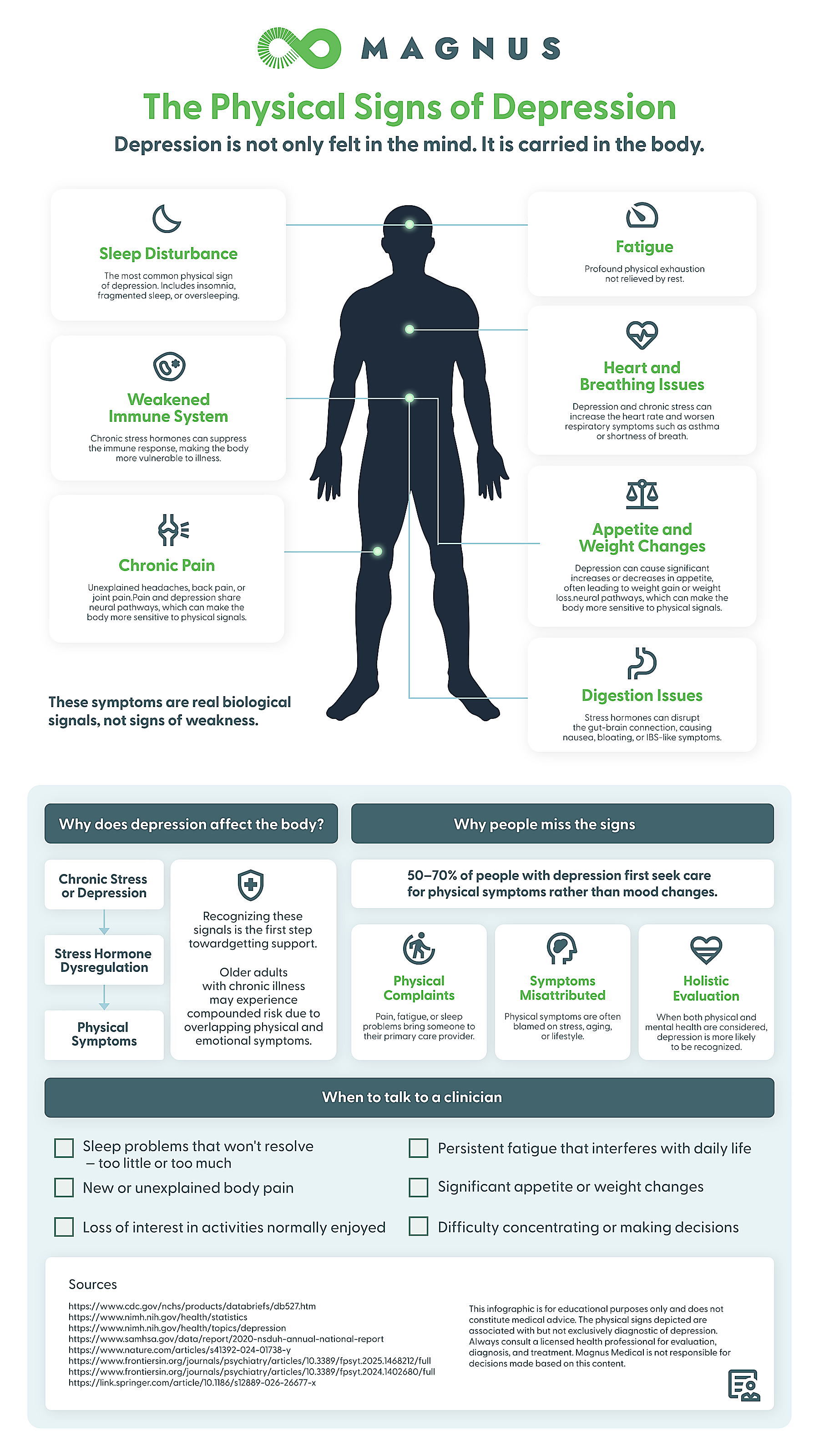
Copy and paste the below code to host this infographic on your site:
How Common Is Depression?
Depression is far more widespread than many people realize. An estimated 13.1% of Americans aged 12 and older meet the criteria for depression in any given two-week period., Among teenagers that number climbs even higher, with 18.1% of adolescents ages 12–17 experiencing a major depressive episode in the past year.² Rates are highest among young adults ages 18–25, where prevalence ranges from 15% to 20%,.² Women are 1.5–2 times more likely than men to be affected, and older adults face a secondary spike in prevalence that often goes undetected or may be masked by chronic illnesses that can accompany aging.¹
Why the Body Speaks First
For many people, depression doesn’t present as sadness. Between 50% and 70% of patients first seek help from a primary care provider for physical complaints — a sore back, persistent exhaustion, stomach problems — with no immediate awareness that these symptoms may be an indication of a mental health condition.⁷ Pain and depression share overlapping neural pathways, and chronic stress disrupts the body’s hormonal regulation in ways that produce real, measurable physical effects.³
The Pain–Depression Loop
The relationship between chronic pain and depression is one of the most well-documented relationships in medicine. Between 60% and 85% of people living with chronic pain also suffer from comorbid depression.³ Depression can lower the pain threshold, intensifying physical discomfort and manifesting new, unexplained aches in the joints and muscles. Meanwhile, living with unrelenting pain is itself a fast track to depression. Breaking this cycle is a central challenge in treating either condition.
Sleep, Fatigue, and Rest That Doesn’t Help
Ask almost anyone with depression how they sleep, and the answer is rarely “fine.” Between 80% and 90% of people with the condition report sleep problems ranging from insomnia, restless nights, or the opposite extreme of sleeping far too much and still waking exhausted.⁴ That exhaustion may be felt as leaden paralysis, a heaviness in the limbs, back or neck that no amount of rest resolves. Affecting 70% to 80% of those with depression, this exhaustion is often one of the primary symptoms that drives people to seek medical intervention.⁵
The Cost of the Treatment Gap
Despite how common depression is, fewer than half of adults with the condition ever receive professional care.⁶ Stigma plays a role, as does limited access to mental health services, and the misinterpretation of physical symptoms. A person treated for chronic back pain for two years before anyone asks about their mental health is not an exception; it is the norm. The patient who undergoes years of treatment for chronic back pain before their mental health is ever screened is not an outlier; it is often the reality.
This gap creates a significant global toll. Depression is the second leading cause of disability worldwide, draining an estimated $326 billion from the US economy each year.⁸ For people with heart disease, the risks are even more acute, as untreated depression can increase the risk of death by 40% to 50%.⁸ These are not just statistics; these are the measurable consequences of a condition that remains chronically under-identified and insufficiently treated.
The Path to Feeling Better
Depression is treatable but no single approach works for everyone. Cognitive Behavioral Therapy, medication, and integrated care models that bring mental health support into primary care settings addresses both mood and the physical symptoms and has shown meaningful results for many people, ⁶ Innovative interventions like accelerated transcranial magnetic stimulation (TMS), a non-invasive therapy that uses magnetic pulses to stimulate brain areas associated with mood regulation, offer an additional avenue worth exploring with a provider.
The right path forward is individual, and navigating treatment options should always involve a qualified health professional. For the millions of people whose depression has gone unrecognized, the road to wellness often begins by finally connecting the dots between physical symptoms and their mental health.
Get Help Now
If you’re experiencing thoughts of self-harm or feel that you can’t cope, you don’t have to go it alone. Call or text 988 anytime to connect with someone who can help.⁸
Disclaimer: This infographic is for educational purposes only and does not constitute medical advice. The physical signs depicted are associated with but not exclusively diagnostic of depression. Always consult a licensed health professional for evaluation, diagnosis, and treatment. Magnus Medical is not responsible for decisions made based on this content.
¹ https://www.cdc.gov/nchs/products/databriefs/db527.htm
² https://www.samhsa.gov/data/nsduh
³ https://www.nature.com/articles/s41392-024-01738-y
⁴ https://www.frontiersin.org/journals/psychiatry/articles/10.3389/fpsyt.2025.1468212/full
⁵ https://www.frontiersin.org/journals/psychiatry/articles/10.3389/fpsyt.2024.1402680/full
⁶ https://www.nimh.nih.gov/health/statistics
⁷ https://link.springer.com/article/10.1186/s12889-026-26677-x
⁸ https://www.cdc.gov/mentalhealth/

Explore more
Read new insights, patient stories, and updates about personalized neuromodulation treatment for major depressive disorder.